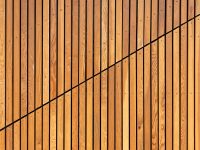
A composite material, commonly employed as an alternative to natural timber, combines wood fibers or flour with thermoplastics. This manufactured product replicates the appearance and workability of traditional lumber. For example, it can be used in decking, siding, and furniture construction.
This engineered lumber offers enhanced resistance to moisture, decay, and insect infestation compared to its natural counterpart. Its utilization contributes to resource conservation by incorporating recycled plastics and reducing deforestation pressures. Originally developed as a durable option for exterior applications, it provides long-term cost savings due to decreased maintenance requirements.
The following sections will detail the manufacturing processes, performance characteristics, applications, and environmental considerations related to this increasingly prevalent construction material.
1. Durability
The enhanced lifespan and resistance to degradation inherent in composite lumber represent a core advantage over traditional wood products. Its composition, combining plastic polymers with wood fibers, yields a material impervious to many of the factors that compromise the structural integrity of natural timber. This includes resistance to rot, fungal decay, and insect infestation, factors which necessitate costly maintenance and eventual replacement in conventional wooden structures. The cause of this increased durability lies in the hydrophobic nature of the plastic component, preventing moisture absorption and thereby inhibiting the biological processes that lead to decomposition.
For example, in coastal environments, wooden decking is susceptible to rapid deterioration due to saltwater exposure and marine borers. Utilizing this material eliminates the need for frequent treatments with preservatives and significantly extends the service life of the decking. Similarly, in high-humidity regions, structures built with conventional lumber are prone to mold and mildew growth, leading to structural weakening and health concerns. The resistance of composite alternatives to these environmental stressors provides a tangible and economically significant benefit.
In summation, the durability afforded by this composite is not merely a superficial characteristic but a fundamental attribute directly impacting its long-term cost-effectiveness and suitability for demanding applications. While initial investment costs may be higher than traditional lumber, the reduced maintenance requirements and extended lifespan ultimately translate into significant savings, making it a viable and often preferable alternative, especially in environments conducive to wood decay. The understanding of this durability, therefore, is essential for informed decision-making in construction and infrastructure projects.
2. Moisture Resistance
The inherent resistance to moisture absorption is a defining characteristic, significantly differentiating it from natural wood. This attribute stems from the plastic component integrated within the composite structure, rendering it largely impervious to water penetration. Consequently, the detrimental effects associated with moisture exposure in traditional lumberswelling, warping, cracking, and rotare substantially mitigated. The cause-and-effect relationship is clear: the plastic matrix prevents water from reaching the wood fibers, effectively inhibiting degradation. This resistance is not merely a superficial benefit; it is crucial to the long-term structural integrity and performance of the material, particularly in exterior applications.
Practical implications of this moisture resistance are far-reaching. In decking applications, for example, it eliminates the need for regular sealing and staining required to protect natural wood from weathering. This reduces maintenance costs and extends the lifespan of the deck. Similarly, in marine environments, pilings and docks constructed with composite materials withstand constant exposure to saltwater without the decay that plagues traditional timber. The significance of this resistance is further underscored in humid climates, where fungal growth and insect infestation are rampant in wooden structures. By preventing moisture absorption, the material inhibits the conditions necessary for these organisms to thrive, further enhancing its durability.
In conclusion, moisture resistance is an indispensable component, directly impacting its longevity and reducing maintenance requirements. Understanding this connection is paramount for architects, engineers, and homeowners seeking durable, low-maintenance alternatives to traditional lumber, particularly in environments where moisture poses a significant threat to structural integrity. While challenges remain in terms of cost and material composition optimization, its moisture resistance positions it as a compelling choice for a wide range of applications.
3. Recycled Content
The incorporation of recycled materials into composite lumber manufacturing represents a significant intersection of environmental responsibility and material innovation. The utilization of recycled plastics and, in some cases, reclaimed wood fibers, addresses waste management concerns while simultaneously reducing the demand for virgin resources.
-
Post-Consumer Plastic Waste Reduction
A substantial portion of the plastic component is often derived from post-consumer sources, such as plastic bags, bottles, and packaging. By diverting these materials from landfills, the manufacturing process contributes to reducing plastic waste accumulation and mitigating its environmental impact. For example, the transformation of discarded milk jugs into decking boards exemplifies this circular economy approach. The implications extend beyond waste reduction to include decreased reliance on fossil fuels for virgin plastic production.
-
Industrial Byproduct Utilization
Beyond post-consumer waste, industrial plastic byproducts, generated during manufacturing processes, can also be incorporated. This further minimizes waste streams and maximizes resource utilization. For instance, polyethylene or polypropylene scrap from various industrial applications can be reprocessed and integrated into the composite formulation. The use of these byproducts reduces the overall environmental footprint of both the plastic and construction industries.
-
Wood Fiber Sourcing from Reclaimed Materials
Some formulations incorporate reclaimed wood fibers, derived from sources such as construction and demolition debris or discarded wood pallets. This practice reduces the demand for newly harvested timber, contributing to forest conservation efforts. The utilization of these reclaimed fibers requires careful processing to ensure consistency and structural integrity, but the environmental benefits are substantial.
-
Impact on Material Lifecycle Assessment
The inclusion of recycled content significantly impacts the lifecycle assessment (LCA) of this product. LCA studies often demonstrate reduced energy consumption, greenhouse gas emissions, and water usage compared to products made entirely from virgin materials. This improved environmental profile enhances its attractiveness as a sustainable building material and aligns with increasing consumer demand for eco-conscious products.
These various facets of recycled content in composite lumber collectively contribute to a more sustainable construction industry. While challenges remain in ensuring consistent material quality and addressing potential concerns related to the long-term performance of recycled plastics, the environmental benefits are undeniable, positioning this as a valuable tool in promoting resource conservation and waste reduction.
4. Workability
Workability, in the context of composite lumber, defines the ease and efficiency with which it can be shaped, fastened, and otherwise manipulated using conventional woodworking tools and techniques. This characteristic significantly influences its adoption and application in various construction and design projects.
-
Cutting and Shaping
Composite lumber generally exhibits good machinability, allowing for cutting, drilling, and shaping with standard saws and drill bits. Unlike natural wood, however, it may produce more plastic-like shavings during cutting. The density and composition of the composite influence the optimal cutting speed and blade type. For example, high-density formulations might require slower cutting speeds to prevent overheating and potential melting of the plastic component. Furthermore, unlike wood, it doesn’t split easily.
-
Fastening and Joinery
Traditional fastening methods, such as screws and nails, can be effectively employed with composite lumber. However, pre-drilling is often recommended, particularly with high-density materials, to prevent splitting or cracking. The type of fastener used should be compatible with the composite’s composition to minimize corrosion and ensure secure connections. Specialized fasteners designed for composite materials are available and often recommended for exterior applications. Adhesives specifically formulated for bonding plastics and wood fibers can also be utilized for certain joinery applications, providing increased strength and water resistance.
-
Surface Finishing and Detailing
While composite lumber possesses inherent color and texture, surface finishing options are more limited compared to natural wood. Painting is possible but requires the use of primers and paints specifically designed for plastic surfaces to ensure proper adhesion. Staining is generally not recommended, as the plastic component inhibits stain absorption. Embossing and texturing can be applied during the manufacturing process to create different aesthetic effects. The ease of creating detailed profiles and intricate designs depends on the material’s density and the capabilities of the manufacturing equipment.
-
Weight and Handling
The weight of composite lumber can vary depending on its composition, but it is generally heavier than comparable dimensions of softwood lumber. This increased weight can impact handling and installation procedures, potentially requiring additional manpower or specialized equipment for larger projects. The weight-to-strength ratio, however, often compensates for the increased weight, providing a more durable and long-lasting structure. The increased density also contributes to enhanced sound dampening characteristics.
In summary, the workability characteristics of composite lumber present a balance between the familiar techniques of woodworking and the unique properties of its composite nature. While some adjustments to traditional methods may be necessary, its machinability, fastening capabilities, and potential for surface detailing make it a versatile material for a wide range of applications, particularly in situations where durability and low maintenance are paramount. Understanding these nuances is essential for maximizing its potential and ensuring successful project outcomes.
5. Dimensional Stability
Dimensional stability, defined as the ability of a material to maintain its original dimensions under varying environmental conditions, is a critical performance characteristic in construction materials. In the context of composite lumber, this attribute significantly impacts its suitability for outdoor applications where exposure to temperature fluctuations and moisture is inevitable.
-
Coefficient of Thermal Expansion
The coefficient of thermal expansion (CTE) quantifies how much a material expands or contracts per degree of temperature change. Composite lumber typically exhibits a lower CTE than traditional wood, meaning it experiences less expansion and contraction with temperature variations. This reduced thermal movement minimizes stress on fasteners and adjacent materials, preventing warping or buckling. For example, decking installed in regions with extreme temperature swings will maintain a more consistent surface, reducing the risk of loose boards or uneven surfaces.
-
Moisture Absorption and Swelling
Natural wood is hygroscopic, meaning it absorbs moisture from the surrounding environment, leading to swelling. This dimensional change can cause structural problems and aesthetic issues. Composite lumber, due to the presence of plastics, exhibits significantly lower moisture absorption. This reduced hygroscopic behavior results in less swelling and shrinkage, contributing to greater dimensional stability. As an example, siding made from this material will resist cupping or bowing caused by moisture absorption, maintaining a consistent appearance over time.
-
Creep Resistance
Creep refers to the tendency of a solid material to deform permanently under sustained stress. In structural applications, creep can lead to sagging or deformation over time. Composite lumber formulations are engineered to resist creep, maintaining their shape and load-bearing capacity under continuous pressure. This is particularly important in decking applications, where sustained loads from furniture and foot traffic can cause traditional wood to sag. Properly formulated materials demonstrate a significant improvement in creep resistance, ensuring long-term structural integrity.
-
Influence of Material Composition
The dimensional stability of composite lumber is directly influenced by the specific types and proportions of wood fibers and plastics used in its composition. Higher concentrations of plastics generally result in lower moisture absorption and greater resistance to dimensional changes. However, the specific type of plastic also plays a role. For instance, polyethylene (PE) based composites may exhibit different expansion and contraction rates compared to polyvinyl chloride (PVC) based composites. Optimizing the material composition is therefore crucial for achieving the desired level of dimensional stability for a given application.
The inherent dimensional stability contributes significantly to its long-term performance and reduces maintenance requirements. Its resistance to expansion, contraction, and moisture-induced changes makes it a reliable alternative to traditional lumber in demanding outdoor environments. This enhanced stability translates into reduced lifecycle costs and improved structural integrity, solidifying its position as a valuable material in modern construction.
Practical Guidance for Working with Plastic Wood
This section provides essential recommendations to optimize the use of composite lumber in construction and design applications. Adhering to these guidelines will enhance performance and ensure long-term durability.
Tip 1: Pre-Drilling is Essential: Always pre-drill pilot holes before driving screws or nails. This prevents splitting and ensures secure fastening, particularly with high-density formulations. Utilize drill bits designed for composite materials for optimal results.
Tip 2: Employ Appropriate Fasteners: Select fasteners specifically designed for use with composite lumber. Stainless steel or coated screws are recommended to resist corrosion, especially in exterior applications. The length of the fastener should be sufficient to penetrate the underlying structure securely.
Tip 3: Account for Thermal Expansion: Composite lumber expands and contracts with temperature changes, albeit less than natural wood. When installing decking or siding, leave adequate spacing between boards to accommodate this movement. Refer to manufacturer guidelines for recommended spacing based on local climate conditions.
Tip 4: Ensure Proper Ventilation: Adequate ventilation beneath decking and around siding is crucial for preventing moisture buildup and promoting air circulation. This minimizes the risk of mold growth and extends the lifespan of the material. Follow building code requirements for ventilation in exterior construction.
Tip 5: Use Appropriate Cutting Tools: Employ carbide-tipped saw blades designed for cutting plastics and composite materials. These blades provide cleaner cuts and reduce the risk of chipping or splintering. Avoid using dull blades, as they can generate excessive heat and melt the plastic component.
Tip 6: Consider Color Fading: While generally resistant to fading, some color variations may occur over time due to prolonged exposure to sunlight. Select UV-resistant formulations and consider darker colors, which tend to exhibit less noticeable fading. Rotate boards periodically to promote even exposure to sunlight.
Tip 7: Clean Regularly: Maintain the appearance and prolong the lifespan by cleaning regularly. Use mild soap and water to remove dirt, debris, and mildew. Avoid using harsh chemicals or abrasive cleaners, as they can damage the surface. Pressure washing may be used with caution, following manufacturer guidelines for pressure settings and nozzle distance.
By incorporating these recommendations, users can maximize the benefits of composite lumber, ensuring durable, long-lasting, and aesthetically pleasing results. Proper installation and maintenance are essential for realizing the full potential of this versatile material.
The subsequent section will address common misconceptions and potential drawbacks associated with this composite, providing a balanced perspective on its application.
Conclusion
The preceding discussion has explored the defining characteristics of plastic wood: its durability, moisture resistance, recycled content, workability, and dimensional stability. These attributes collectively position it as a viable alternative to traditional lumber in a range of construction applications. The material’s resistance to decay and insect infestation, coupled with its potential for incorporating recycled plastics, addresses both performance and environmental concerns.
Further research and development remain essential to optimize material formulations, reduce production costs, and enhance long-term performance. Architects, engineers, and builders should carefully consider the specific requirements of each project when evaluating its suitability, prioritizing informed decision-making based on a comprehensive understanding of its properties and limitations. The future of construction materials may well incorporate advancements in composite technology, contributing to more sustainable and resilient infrastructure.