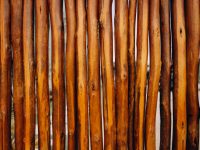
The Ochroma pyramidale, a fast-growing tropical hardwood, is noted for its exceptionally low density. This characteristic arises from the large cells and thin walls that constitute its wood structure, resulting in material significantly lighter than most other woods. For instance, a cubic foot of kiln-dried lumber from this species may weigh between 4 and 12 pounds, compared to oak, which typically weighs around 45 pounds per cubic foot.
Its minimal weight coupled with reasonable strength has made it invaluable across diverse applications. Historically, it played a crucial role in the construction of rafts and model airplanes. More recently, it is used in core materials for wind turbine blades, sandwich composite structures in boats, and flotation devices. The rapid growth of this species also contributes to its sustainability as a resource, allowing for relatively quick replenishment compared to slower-growing hardwoods.
Understanding the properties, cultivation, and applications of this lightweight wood is essential for industries relying on sustainable, strong, and buoyant materials. Further exploration will delve into specific aspects of its silviculture, mechanical properties, and emerging uses in engineering and manufacturing.
1. Exceptional Lightness
The exceptional lightness of Ochroma pyramidale wood is its defining characteristic, driving its selection in specialized applications where weight minimization is paramount. This property originates from the cellular structure of the wood itself.
-
Cellular Structure and Density
The wood’s low density is a direct consequence of its large cell size and thin cell walls. These anatomical features create a high volume of air space within the wood matrix, significantly reducing its overall weight. The cell wall material itself is composed of cellulose, hemicellulose, and lignin, but the proportion of air space is dominant in determining the density.
-
Strength-to-Weight Ratio Implications
Despite its low density, the wood possesses a surprisingly high strength-to-weight ratio. This makes it suitable for applications where structural integrity is required without adding substantial weight. Examples include model aircraft construction, where minimizing weight allows for greater flight performance, and core materials in composite structures, where it contributes to stiffness without excessive mass.
-
Buoyancy and Flotation Applications
The low density directly translates to high buoyancy. A material less dense than water will float, and the significant density difference between water and Ochroma pyramidale wood makes it an ideal material for flotation devices. Historically, it was used extensively in rafts, and today it finds application in life preservers and similar safety equipment.
-
Acoustic Properties
The unique cellular structure also influences the acoustic properties of the wood. It exhibits good sound dampening characteristics, making it useful in certain acoustic applications where lightweight sound absorption is desired. While not typically used for high-end musical instruments, it can be found in components of some soundproofing materials.
The interrelation of cellular structure, strength, buoyancy, and acoustic properties, all stemming from its low density, underscores the singular value of this wood. Its lightness, therefore, is not merely a characteristic but a fundamental attribute that dictates its utility across a broad spectrum of applications, from simple flotation to complex engineering designs.
2. Rapid Growth
The exceptionally rapid growth of Ochroma pyramidale is a defining characteristic intrinsically linked to its economic and ecological significance. This species exhibits one of the fastest growth rates of any commercially harvested tree, capable of adding several meters in height per year under optimal conditions. The cause of this accelerated development lies in a combination of genetic factors and environmental adaptations. Its inherent genetic makeup predisposes it to rapid cell division and expansion, while its adaptation to tropical climates with abundant rainfall and sunlight provides the necessary resources for sustained growth. As a component, its rapid development significantly reduces the time required for harvesting, enhancing its economic viability as a plantation species. In Ecuador, for example, plantations can reach harvestable size in as little as five to seven years, compared to decades for many traditional hardwoods.
The consequences of this rapid growth extend beyond economic advantages. Ecologically, it enables quick reforestation of degraded lands and provides a fast carbon sequestration rate. The species serves as an effective tool in carbon offsetting projects and restoring biodiversity to deforested areas. Furthermore, the rapid growth necessitates specific silvicultural practices. Seedlings require ample spacing and regular pruning to maximize wood quality. Management strategies also involve careful monitoring for pests and diseases, which can quickly spread in dense, monoculture plantations. The interplay between rapid growth and silvicultural management presents both opportunities and challenges in plantation management.
In summary, the rapid growth of Ochroma pyramidale is not merely a biological attribute but a crucial factor shaping its economic viability, ecological role, and silvicultural requirements. Understanding this connection is essential for sustainable management and utilization of this valuable resource. The challenges of pest management and the need for responsible reforestation strategies, however, must be addressed to ensure the long-term benefits of this fast-growing species are realized without detrimental environmental impacts.
3. Structural Properties
The structural properties of Ochroma pyramidale are critical considerations in determining its suitability for various engineering and construction applications. While renowned for its low density, its ability to withstand specific loads and stresses dictates its effective utilization.
-
Tensile Strength
Tensile strength refers to the maximum stress the wood can withstand while being stretched or pulled before breaking. While lower than denser hardwoods, the tensile strength is sufficient for applications like model aircraft wings, where lightweight support is necessary. Its lower density allows for larger cross-sectional areas to be used without significantly increasing the overall weight, thereby compensating for the reduced strength.
-
Compressive Strength
Compressive strength is the ability to withstand forces that tend to compress or crush the material. It exhibits moderate compressive strength. This property is relevant in applications where the wood is used as a core material in sandwich composite structures, such as boat hulls or wind turbine blades. The core provides resistance to buckling under compressive loads, enhancing the overall structural integrity.
-
Flexural Strength (Bending Strength)
Flexural strength measures the wood’s resistance to bending forces. In certain designs, it is utilized as a core material to increase flexural rigidity in lightweight structures. This is particularly valuable in marine applications, where boat hulls must withstand significant bending stresses caused by wave action.
-
Shear Strength
Shear strength refers to the ability to resist forces that cause one part of the material to slide relative to another. Its shear strength is limited, influencing its use in applications where significant shear forces are present. Designers often compensate for this by incorporating it with stronger materials in composite structures, distributing the shear loads more effectively.
In conclusion, the structural properties, while not exceptional compared to denser woods, are uniquely suited for applications where minimizing weight is a primary design constraint. The material’s tensile, compressive, and flexural strength characteristics, when considered in conjunction with its low density, enable innovative engineering solutions across diverse fields, including aerospace, marine, and renewable energy.
4. Versatile Applications
The low density and adequate strength-to-weight ratio of the wood from Ochroma pyramidale are the primary drivers behind its diverse range of applications. The material’s workability contributes significantly to this versatility. It is easily cut, shaped, and glued, facilitating its integration into various designs and manufacturing processes. The cause-and-effect relationship is straightforward: the physical properties of the wood enable its use in numerous contexts. The importance of its versatile applications as a component of its overall value cannot be overstated; it elevates this species beyond a mere curiosity to a commercially significant resource.
Real-life examples vividly illustrate its versatility. In model aircraft construction, the lightness of the wood enables complex designs to achieve flight. This benefit has led to its longstanding use in hobbyist and scientific contexts. In the marine industry, it serves as a core material in composite boat hulls, providing buoyancy and structural support without adding excessive weight. Furthermore, the wind energy sector utilizes it in wind turbine blades, where its lightweight nature reduces the overall load on the tower structure. These examples highlight the practical significance of understanding how its properties translate into specific use cases. The understanding is critical for designers and engineers selecting suitable materials and for businesses exploring new applications.
In summary, the versatility of its applications stems directly from its fundamental physical characteristics. This multifaceted utility positions it as a valuable and sustainable resource. While challenges related to sustainability and responsible forestry practices remain, the proven adaptability of the wood ensures its continued importance across multiple industries. Further research into novel applications, such as bio-based composites and sustainable packaging, may further expand its relevance in the future.
5. Sustainable Resource
The designation of Ochroma pyramidale as a sustainable resource hinges on several factors, including its rapid growth rate, responsible forestry practices, and the environmental impacts of its cultivation and utilization. Sustainability, in this context, implies that the tree can be harvested and utilized in a manner that meets current needs without compromising the ability of future generations to meet their own.
-
Reforestation and Plantation Management
Sustainable harvesting of Ochroma pyramidale necessitates effective reforestation programs and responsible plantation management. Companies engaged in its cultivation are responsible for ensuring that harvested areas are replanted with seedlings. Sustainable certification standards, such as those from the Forest Stewardship Council (FSC), provide guidelines for responsible forestry practices, including minimizing soil erosion, protecting water resources, and preserving biodiversity within plantation areas. These practices contribute to the long-term viability of the resource.
-
Carbon Sequestration and Environmental Impact
Due to its rapid growth, Ochroma pyramidale sequesters significant amounts of carbon dioxide from the atmosphere, mitigating greenhouse gas emissions. This carbon sequestration contributes positively to climate change mitigation efforts. However, the conversion of natural forests to plantations can have negative environmental impacts, including habitat loss and reduced biodiversity. Therefore, sustainable harvesting practices must consider the broader ecological context and strive to minimize negative impacts on surrounding ecosystems.
-
Waste Reduction and By-product Utilization
Minimizing waste during processing is an important component of sustainable utilization. Utilizing by-products, such as bark and sawdust, for other purposes can further enhance the sustainability of its use. For instance, bark can be used as mulch or in the production of compost, while sawdust can be converted into biofuels or used in composite materials. Reducing waste and maximizing the utilization of all parts of the tree contributes to a more circular and sustainable resource management system.
-
Certification and Transparency
Third-party certification schemes, such as FSC, provide a mechanism for verifying the sustainability of forestry operations. These certifications require adherence to specific environmental and social standards, ensuring that the wood has been harvested and processed responsibly. Transparency in the supply chain, from the forest to the end consumer, is also crucial for building trust and promoting sustainable practices. Consumers can support sustainable forestry by choosing products with credible certifications.
The sustainable use of Ochroma pyramidale requires a holistic approach that considers environmental, economic, and social factors. Effective reforestation programs, responsible plantation management, waste reduction, and transparent supply chains are essential for ensuring that this valuable resource can continue to be utilized without compromising the well-being of future generations and the health of the planet.
Tips for Working with Balsa Tree Lumber
Successful utilization of Ochroma pyramidale requires a nuanced understanding of its unique properties and careful adherence to best practices during handling and processing.
Tip 1: Select Appropriate Grade: Grade selection is paramount. Different grades exist, offering varying densities and strengths. Lower grades may exhibit more imperfections and lower density, suitable for non-structural applications. Higher grades, though more expensive, offer increased strength and consistent density, essential for structural components.
Tip 2: Utilize Sharp Cutting Tools: Its softness necessitates sharp tools. Dull blades or saws cause crushing and splintering, leading to inaccurate cuts and wasted material. Employ fresh blades and regularly sharpen tools to maintain clean cuts and minimize material loss.
Tip 3: Employ Light Clamping Pressure: When gluing, use minimal clamping pressure. Excessive force compresses the wood, resulting in deformation and weakened joints. Distribute clamping pressure evenly across the surface using soft padding to prevent damage.
Tip 4: Avoid Over-Sanding: Sanding should be performed with caution. Aggressive sanding removes material quickly, leading to uneven surfaces and weakened structures. Use fine-grit sandpaper and apply light pressure to achieve a smooth finish without compromising structural integrity.
Tip 5: Apply Sealer Before Painting: Its porous nature requires sealing before painting. Unsealed wood absorbs paint unevenly, resulting in a blotchy finish. Apply a suitable sealer or primer to create a uniform surface for optimal paint adhesion and appearance.
Tip 6: Handle with Care: The lightweight and relatively fragile nature of this material require careful handling throughout all stages of fabrication. Avoid dropping or subjecting it to undue stress, as this can easily lead to dents, cracks, or breakage.
Tip 7: Consider Grain Direction: The grain direction significantly impacts its strength and flexibility. When designing structures, align the grain to coincide with the primary stress direction to maximize structural performance. Understanding grain orientation is essential for robust construction.
Following these guidelines will maximize the potential of this unique wood while minimizing waste and ensuring structural integrity. The ability to work effectively with it unlocks significant benefits across diverse applications.
These tips provide a foundation for skillful manipulation. Further exploration will focus on advanced techniques and specialized applications within specific industries.
Conclusion
This exploration has illuminated the multifaceted significance of the balsa tree ( Ochroma pyramidale). From its exceptional lightness and rapid growth to its diverse applications and potential as a sustainable resource, the examination has underscored its unique value. The structural properties, while not on par with denser hardwoods, are optimally suited for weight-sensitive applications, and the tips for working with the lumber are crucial for maximizing its utility.
Continued responsible cultivation, innovative application development, and rigorous adherence to sustainable forestry practices are essential. The future prospects of the balsa tree hinge on our collective commitment to ensuring its responsible utilization and promoting its ecological role, thereby securing its continued contribution to various industries and the environment alike. Further investigation and adoption of stringent standards are paramount.