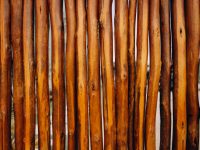
The timber derived from the rubber tree, Hevea brasiliensis, is a light-colored hardwood known for its dense grain and minimal shrinkage. Typically sourced from plantations after the tree’s economically productive latex-producing lifespan concludes, it presents a sustainable alternative to traditional hardwoods. Its inherent properties lend themselves to a wide array of applications, from furniture manufacturing to construction components.
The utilization of this resource promotes ecological balance by providing an additional income stream to rubber farmers and reducing pressure on natural forests. Its relatively fast growth rate and plantation management contribute to its renewability. Historically, it was often discarded after its latex production ceased, leading to significant waste. However, its desirable physical characteristics have led to increased demand and recognition as a valuable material.
The following sections will delve into specific aspects, including its physical properties, processing techniques, applications in various industries, and considerations for its long-term sustainability.
1. Density
The density of Hevea brasiliensis timber typically ranges from 560 to 640 kg/m at a moisture content of 12%. This moderate density contributes significantly to its strength and stability, positioning it as a suitable material for furniture framing, interior joinery, and even certain structural components. Higher density generally correlates with increased load-bearing capacity and resistance to deformation under stress. For instance, in furniture construction, elements such as table legs or chair supports benefit from the inherent firmness imparted by its specific gravity, enhancing the overall structural integrity and longevity of the finished product.
The density of this wood also influences its machinability and finishing characteristics. While not as dense as some hardwoods, it provides a good balance between ease of working and resistance to wear. This allows for efficient processing using standard woodworking tools and facilitates a smooth surface finish, essential for aesthetic appeal in applications like cabinet making and decorative panels. Furthermore, its density impacts screw-holding ability, a critical factor in assembly operations and ensuring secure connections in fabricated items.
In conclusion, the specific density of this particular timber constitutes a key factor in determining its suitability for diverse applications. Its intermediate density affords a favorable combination of strength, workability, and cost-effectiveness, contributing to its widespread adoption across various industries. While not possessing the extreme hardness of some tropical hardwoods, its density strikes a balance that renders it a versatile and practical choice for numerous wood-based projects.
2. Sustainability
The consideration of renewability and responsible resource management is intrinsically linked to the use of Hevea brasiliensis timber. Its adoption as a material source represents a viable strategy for mitigating deforestation and promoting environmentally conscious practices within the wood products industry.
-
Lifecycle Extension
The utilization of rubber trees for timber production at the end of their latex-producing lifespan extends their economic value and prevents them from being discarded as waste. In Southeast Asia, for example, large-scale rubber plantations now incorporate timber harvesting, transforming what was once a waste stream into a valuable resource. This practice minimizes the need to clear-cut native forests for timber, thereby preserving biodiversity and ecological balance.
-
Carbon Sequestration
During their growth cycle, rubber trees absorb atmospheric carbon dioxide, storing it within their biomass. Even after harvesting, the carbon remains sequestered within the wood products manufactured from this resource. A study by the International Rubber Research and Development Board showed that rubber plantations can sequester significant amounts of carbon, comparable to some natural forests, thereby contributing to climate change mitigation.
-
Reduced Pressure on Natural Forests
The availability of this wood as a commercial timber alternative reduces the demand for hardwoods sourced from old-growth forests. By providing a readily available and relatively inexpensive material, it alleviates pressure on vulnerable ecosystems, safeguarding them from unsustainable logging practices. This substitution is particularly important in regions where deforestation poses a significant threat to biodiversity and indigenous communities.
-
Sustainable Plantation Management
Responsible plantation management practices are crucial to ensuring the long-term environmental benefits of utilizing this particular timber. These practices include minimizing pesticide and herbicide use, promoting soil conservation, and implementing reforestation programs. Certifications such as the Forest Stewardship Council (FSC) can provide assurance that rubber plantations are managed in an environmentally and socially responsible manner, contributing to the overall sustainability of this resource.
In conclusion, the sustainable characteristics associated with this particular resource extend beyond its renewability. The lifecycle extension, carbon sequestration potential, reduced pressure on natural forests, and responsible plantation management practices collectively position it as a compelling choice for environmentally conscious consumers and manufacturers seeking to minimize their ecological footprint. While challenges remain in ensuring consistent adherence to sustainable practices across all rubber plantations, the inherent potential for environmental benefit remains significant.
3. Workability
The workability of Hevea brasiliensis timber is a significant factor contributing to its widespread use across various woodworking applications. Its relatively uniform texture and moderate density facilitate ease of machining, shaping, and finishing, thereby reducing manufacturing time and costs. The absence of excessive resin or gum deposits, commonly found in some softwoods, further enhances its machinability, minimizing tool wear and producing clean, smooth cuts. For example, cabinet makers often favor it for crafting intricate designs and moldings due to its ability to hold fine details without splintering or chipping. Its acceptance of various adhesives and fasteners is another attribute that supports its workability, making it suitable for assembling complex structures.
Furthermore, the ease with which this specific wood can be sanded and finished is a crucial aspect of its workability. Its light color and consistent grain pattern allow for uniform staining and painting, enabling manufacturers to achieve a wide range of aesthetic effects. This adaptability to different finishing techniques is particularly valuable in the furniture industry, where consumer preferences often dictate specific color palettes and surface textures. In contrast to some hardwoods that require specialized equipment or techniques for finishing, it can be effectively treated with standard finishing tools and materials, streamlining the manufacturing process. Real-world examples include its use in crafting intricately carved furniture components or achieving a smooth, durable finish on kitchen cabinets.
In summary, the excellent workability is a defining characteristic of this particular timber, directly influencing its versatility and economic viability. The ease of machining, shaping, finishing, and assembly translates into reduced manufacturing costs, improved product quality, and a wider range of design possibilities. While not as exceptionally hard as some tropical hardwoods, its workability provides a practical advantage, making it a preferred choice for numerous woodworking applications, from furniture production to interior millwork. Understanding the practical implications of its workability allows for optimized utilization and more sustainable sourcing of this valuable material.
4. Cost-effectiveness
The economic viability of Hevea brasiliensis timber is a primary driver behind its widespread adoption across diverse industries. Its cost-effectiveness stems from a confluence of factors that render it a competitive alternative to traditional hardwoods and other construction materials.
-
Reduced Material Costs
Sourcing this particular timber frequently involves lower raw material expenses compared to many hardwoods. This advantage arises from its origin as a byproduct of rubber production; the trees are harvested after their economically productive latex-yielding lifespan. The resulting supply chain efficiencies and resource optimization contribute to reduced input costs for manufacturers. The lower price point makes it accessible for applications where budget constraints are a significant consideration, such as mass-produced furniture or affordable housing construction.
-
Efficient Processing and Manufacturing
As previously outlined, its workability translates directly into cost savings during processing and manufacturing. The ease of machining, shaping, and finishing minimizes labor requirements, reduces tooling wear, and shortens production cycles. This efficient processing translates into lower per-unit production costs, enhancing its cost-competitiveness. For instance, furniture manufacturers can produce a higher volume of finished goods with fewer labor hours compared to working with denser or more difficult-to-machine hardwoods.
-
Extended Lifespan and Durability
While not as inherently durable as some high-end hardwoods, its treated form can exhibit adequate resistance to wear, decay, and insect infestation, particularly when subjected to appropriate preservation methods. This extended lifespan minimizes replacement costs over the long term, contributing to its overall cost-effectiveness. For example, when used in interior construction or furniture applications, properly treated elements made from this timber can provide a service life comparable to more expensive alternatives, offering a cost-effective solution for budget-conscious consumers.
-
Waste Reduction and Resource Optimization
The utilization of the entire Hevea brasiliensis tree, including the timber, promotes resource optimization and minimizes waste. This holistic approach not only enhances its environmental sustainability but also contributes to its cost-effectiveness. By diverting a resource that would otherwise be discarded, manufacturers are able to utilize a readily available and relatively inexpensive material, thereby reducing their reliance on virgin timber sources and minimizing disposal costs. Additionally, smaller pieces and offcuts can be repurposed for other products, further reducing waste and maximizing material utilization.
In conclusion, the cost-effectiveness of this particular timber is not solely attributable to its lower raw material costs. The combined benefits of efficient processing, extended lifespan, and reduced waste collectively contribute to its economic viability and make it an attractive alternative to traditional materials in a wide array of applications. Its responsible sourcing and sustainable utilization further enhance its appeal, aligning cost considerations with environmentally conscious practices.
5. Durability
The inherent resistance of Hevea brasiliensis timber to physical degradation significantly impacts its suitability for various applications. While not possessing the exceptional hardness of some slow-growing hardwoods, the durability of this material is a complex property influenced by several factors, including density, processing techniques, and environmental conditions. Its vulnerability to fungal decay and insect infestation, if untreated, necessitates preventative measures to ensure long-term structural integrity. The cause of degradation often lies in the wood’s susceptibility to moisture absorption, which creates an environment conducive to microbial growth and attracts wood-boring insects. The effect is a gradual weakening of the material, ultimately compromising its structural integrity and aesthetic appeal.
Enhancements to the durability of Hevea brasiliensis timber are typically achieved through chemical treatments, such as pressure impregnation with preservatives like chromated copper arsenate (CCA) or alkaline copper quaternary (ACQ). These treatments create a protective barrier against decay and insects, significantly extending the lifespan of the material. Kiln drying is another crucial step in enhancing durability; reducing the moisture content of the wood minimizes the likelihood of fungal growth. In furniture manufacturing, surface finishes like varnish or polyurethane provide an additional layer of protection against moisture and abrasion, further enhancing its resistance to wear and tear. For example, in exterior applications, such as decking or fencing, proper treatment is paramount to ensure the wood withstands exposure to the elements and maintains its structural integrity over time.
In summary, the durability of this particular timber is a contingent property dependent on appropriate processing and treatment. While its natural resistance to degradation may be limited, these enhancements significantly improve its long-term performance in a variety of applications. Understanding the factors that influence its durability allows for informed decision-making regarding material selection and preservation strategies, ensuring the sustainable and effective utilization of this valuable resource.
Considerations for Optimizing the Use of Hevea brasiliensis Timber
The following guidelines provide insights into maximizing the performance and longevity of products manufactured using timber sourced from rubber trees.
Tip 1: Thorough Kiln Drying: Ensure the timber undergoes rigorous kiln drying to a moisture content appropriate for the intended application. This minimizes the risk of dimensional instability, warping, and fungal decay. For interior applications, aim for a moisture content between 6% and 8%.
Tip 2: Implement Preservative Treatments: For applications where the timber is exposed to moisture or is susceptible to insect attack, implement appropriate preservative treatments. Consider pressure impregnation with approved wood preservatives to enhance resistance to biodegradation.
Tip 3: Employ Suitable Finishing Techniques: Apply appropriate surface finishes to protect against moisture penetration, abrasion, and ultraviolet (UV) degradation. Select finishes that are compatible with the wood species and the intended use. Polyurethane or varnish coatings can provide excellent protection for furniture applications.
Tip 4: Prioritize Proper Joint Design: Employ robust joint designs that minimize stress concentrations and maximize structural integrity. Utilize adhesives specifically formulated for hardwood bonding to ensure strong and durable connections. Dovetail or mortise-and-tenon joints offer superior strength compared to simple butt joints.
Tip 5: Consider Density Grading: Implement density grading to segregate timber based on its physical properties. Higher density material is generally stronger and more durable, making it suitable for structural applications. Lower density material can be used for non-structural components.
Tip 6: Practice Responsible Sourcing: Prioritize timber sourced from sustainably managed rubber plantations. Look for certifications such as the Forest Stewardship Council (FSC) to ensure that the timber is harvested in an environmentally responsible manner. This promotes long-term resource availability and minimizes environmental impact.
Adherence to these guidelines optimizes the use of timber from rubber trees, ensuring both performance and sustainability.
The subsequent section will synthesize the key findings and reinforce the overarching advantages of utilizing this versatile and environmentally conscious material.
Conclusion
This exploration has demonstrated the multifaceted benefits of Hevea brasiliensis timber. Its renewability, workability, and cost-effectiveness, coupled with its potential for enhanced durability through appropriate treatments, position it as a viable and increasingly important resource. The responsible utilization of this material contributes to both economic development and environmental stewardship, mitigating the pressure on natural forests and promoting sustainable forestry practices.
Continued research and development into processing techniques and preservation methods are essential to further optimize the performance and extend the lifespan of products manufactured with this resource. Promoting the adoption of certified sustainable sourcing practices remains crucial for ensuring its long-term availability and minimizing the environmental impact of its utilization. Its strategic integration into diverse industries offers a tangible pathway toward a more sustainable and resource-efficient future.